 Back in January I wrote about how a New York City public art project will be building 120 foot tall waterfalls under the Brooklyn Bridge. Well by the end of the month (June 26th) they will be here, and they're apparently coming in groves. The project map shows four locations for waterfalls, and construction photos are available at the project website. I'm psyched for these, It's going to a very cool site to see. [thanks @calacanis]

5.31.2008
The New York City Waterfalls are coming and they'll be all over
Back in January I wrote about how a New York City public art project will be building 120 foot tall waterfalls under the Brooklyn Bridge. Well by the end of the month (June 26th) they will be here, and they're apparently coming in groves. The project map shows four locations for waterfalls, and construction photos are available at the project website. I'm psyched for these, It's going to a very cool site to see. [thanks @calacanis]

5.29.2008
A lot of Windows 7 Eye Candy but is it enough?

This week saw the unveiling of a handful of early screenshots of Windows 7, the next-gen Microsoft Windows that should replace Windows Vista by 2010. My first reaction is that the new Windows looks beautiful, a significant jump towards an operating system that is actually enjoyable to use. But I'm sure that my initial reaction to Vista was the same thing, and a lot of what what was meant to be in Vista never happened. Additionally, much of Vista that exists is slow and unfriendly, so in the end it didn't turn out to be much of a revolutionary step for Microsoft Windows. At this point, another potentially false promise of a powerful Windows operating system probably won't keep me from finally purchasing a Mac as my next computer.
5.27.2008
Reading Inside Steve's Brain - a book about Steve Jobs' product design brilliance
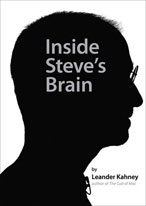 Yesterday I started reading “Inside Steve’s Brain” – a book about Steve Jobs, but more importantly about how he is a master of consumer product design. I’m over a third of the way in and I feel like I’m learning something on almost every page – about him, about successful business practices, about consumer foresight, or about user experience insight. These topics, among others, are rounding out a biographical story not only about what makes Steve Jobs so brilliant and successful, but why Apple is such an intelligent and successful company overall (which is really a reflection of him overall). As I read it, I am also more and more certain that I will finally cave in and buy a Mac laptop come the holidays (I need to sure up my apartment situation first). Among the many things I didn’t know about Steve Jobs…
Starting with his personal life:
- Steve Jobs was adopted (his birth parents must think they gave away a winning lottery ticket
- He’s a college drop out who survived by collecting bottles for pocket change
- He once tried an all apple diet because he thought it would keep him from needing to shower
- After he was ousted from Apple back in the mid 80’s, he was determined to crush Apple by developing two companies
- He found NeXT, a cutting age computer company meant to compete against Apple head on. He later sold NeXT to Apple for nearly half a billion dollars and indirectly the seat back on top of Apple as CEO
- He bought a computer graphics company for $10 million George Lucas when Lucas needed cash for a divorce, and then sold it to Disney years later for $7.4 billion dollars after a string of hits including Toy Story
- As once-again CEO for Apple, he cut a deal with Bill Gates to drop his lawsuit against Microsoft for copyright infringement in exchange for a 5 year commitment to building Microsoft software for Apple, including Microsoft office, the key software that almost every consumer uses
- When he took over Apple the company had an estimated 6 months left of falling profits before bankruptcy
- His core talent was recognizing the need for simplicity in business and design, which is apparent in many of Apple’s successes
- Along with his predecessor, he cut Apple’s product line down from hundreds to only 4, in order to focus the company towards what it could do best and where it could make money; these products, a consumer desktop and laptop, a professional desktop and laptop, were Apple’s only focus for years to come
- Pixar employees are strongly encouraged to take 4 hours per week of continuing education in film, animation, etc, in an on-campus university, regardless if their discipline, to help ensure that employees continue to develop and rank at the top of their game; this has a feel to the much more highly publicized 80/20 rule that Google has pushing employees to continue to experiment on their own projects
His influence on simplicity within Apples products:
- When the Mac Air came out and lacked a CD-Rom it was widely controversial, but this wasn’t the first time Jobs made such a decision; the iMac was the first computer to come without a floppy drive; Jobs recognized this as a fading importance that just added unnecessary bulk to his computer
- The first iPod had the capability for FM radio and voice recording, but Jobs wanted to maintain focus on the ease and functionality of the core purpose of the product, music listening
- Packaging was a critical component – he designs each product packaging so that unpacking the box introduces the consumer to the product in a clear and conceptual way
- Packaging around products like the iPod is meant to showcase the product as if you are buying art
5.25.2008
Where is interesting content being posted on the web?
I never thought I'd be interested in a site that hosts documents (I'm talking PDF's, Powerpoint files..), but lately I'm finding that a lot of really interesting content is showing up on sites like SlideShare.
I'm a big proponent of continuing education - and for the post-college work-force world that often means conventions and conferences where people smarter than ourselves are speaking, giving talks, showing presentations. Unfortunately conferences are too expensive, and most of us aren't in a position to have our company fund day or week long conferences (this is a gripe of mine because while the value isn't instantly visible by production, the education aspect, the increased knowledge and motivation from the conference, goes a long way for the duration of your career - not enough emphasis is put on continuing education in the advertising world I live in).
But these days I'm finding great talks and presentations are showing up on sites that I didn't think I'd ever care about. I now follow links to Scribd and Slideshare, and am noticing that the more interesting videos of live presentations are showing up on Viddler, a more feature rich video site than YouTube that allows for in-video notation and higher def video streaming. So my question is, where are you finding smart content lately, where are you reading or watching the things that make you smarter?
My profile on SlideShare (only one document saved so far)
My profile on Viddler (only two clips saved so far)
My profile on Scribd (only one document posted so far)
[update: I'm saving a list of interesting presentations / talks on Del.icio.us here]
Hopefully my saved content on these sites will grow considerably after this posting, 5/25/08. Meanwhile here's the document I posted on Scribd - screenshots of a new ad campaign my client is running in XBox360 - AboveTheInfluence ads streaming via Massive into NBA Live 2008.
Ever wonder what Google's strategy is?
Every time you read that a new product is being released by Google with no seeming reason but to give yous omething for free, http://googlesystem.blogspot.com/
Google Operating Systemever wonder what their strategy is? Google Docs, Google Earth, Picasa, Sketch-up, etc, everything Google releases is a product that gives the consumer something they always wanted for free.
"Google has a long-term strategy for its search engine and for the other services. "Our goal is to develop services that significantly improve the lives of as many people as possible. In pursuing this goal, we may do things that we believe have a positive impact on the world, even if the near term financial returns are not obvious. For example, we make our services as widely available as we can by supporting over 90 languages and by providing most services for free," wrote Google's founders in the IPO letter" [via Google Operating System]Now sure, eventuallly Google finds a way to make money (Ads are finally coming to Google image search and iGoogle some time in the next few months). And gaining market share by giving something away for free is classic undercutting. And giving us things for free actually gives them significant returns beyond finances (think of the custom maps we've built in Google Maps and the custom architecture developed with Sketchup and the world photos in Panoramio). But sometimes it feels like they're just good guys doing it out of their own good heart, trying to change the world one product at a time because they can afford to do the right thing.
5.22.2008
Google Sites revealed, another redundant product


Google finally unveiled Google Sites to the public, the reformatted product that leverages the JotSpot wiki technology they purchased almost two years ago. My first question is, how is this different than Google Page Creator? Sure, it's more shareable for open editing, which is the main focal point of a Wiki, but after watching the Google overview video for their new Sites product, it really feels like they're billing this as an easy website design tool, which is basically what Page Creator was. Now Page Creator has some additional features, such as easy implementation of Google Gadgets, and Sites has some additional features such as shared editing, but for the most part this could have been one product. Just because Nobody really uses Google Page Creator doesn't mean they should just leave it open and separate and lingering.
More worrisome is the continued developing trend of Google tossing redundant products out into market without a clear focus of how they will grow and become more useful. This is especially clear in the bookmarking sector, where Google now has Google Notebook, Google Bookmarks, Google Share, and Google Reader Notes. Now some of these are more social, some of these are more personal, and some of these are more about research, but in the end there is likely a way for Google to combine many of these products, leverage the interesting features from each, and create something more powerful for the user. Right now this is both confusing and unorganized, as I never know what to share how and when, and whether I'll be able to remember where to find it again. Yes that's because I haven't set rules for my own use, but I shouldn't have to if they have a clear vision.
Other places Google has redundancy? YouTube and Google Video come to mind right away. If Google Video is meant to be exclusively a video search engine, then they should migrate our uploaded videos from Google Video to YouTube and let us have our files in one place, with the added features that Google is rolling out for YouTube such as viewer statistics. Not only do these features not exist on Google Video, but in some fashion they did in the beginning, only Google has let Video linger and many features don't work anymore. That's almost a joke for them.
Thoughts?
5.21.2008
Collective Soul Plays an Acoustic Set in My Office and I sit Front Row
So my company does these really random "Brown Bag Lunch Concert Series" sessions where artists basically come in and perform 3 to 4 songs acoustic in an open area in my office. My company lures that are looking for doors in to the advertising/media world, and in the past we've seen Richie Sambora (from Bon Jovi) and Hanson (who are actually pretty good now) play, among a myriad of others.
Now this morning I came into the office and an email was waiting saying Collective Soul was playing - a random rare gem in the slew of nameless monthly concerts. A little history here, I actually paid to see Collective Soul play last summer as part of an awesome concert with Live and Counting Crows out doors in a minor league baseball stadium. So when I heard Collective Soul would be in the office, I made sure to grab my camera and head up a little early to ensure a seat in the front.
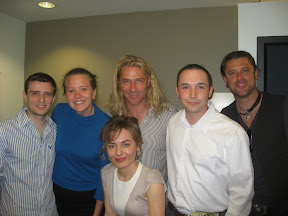 Collective Soul was represented by the two brothers - the main singer, and the guitarist. They played 3 songs acoustic: December, The World I Know, and a 3rd song that I hadn't heard before. Afterwards they stuck around to give out and sign CD's (I have the newest album signed for my father), take pictures, and even offered to connect us with back-stage passes if we make it to a show this summer. It was a really cool, really intimate concert experience that I never expected.
Technorati Tags: collective soul,the world i know,acoustic,acoustic music,acoustic concert,concert
Subscribe to:
Posts (Atom)
